TOURETTE SYNDROME
made by yesly reyes-sorto
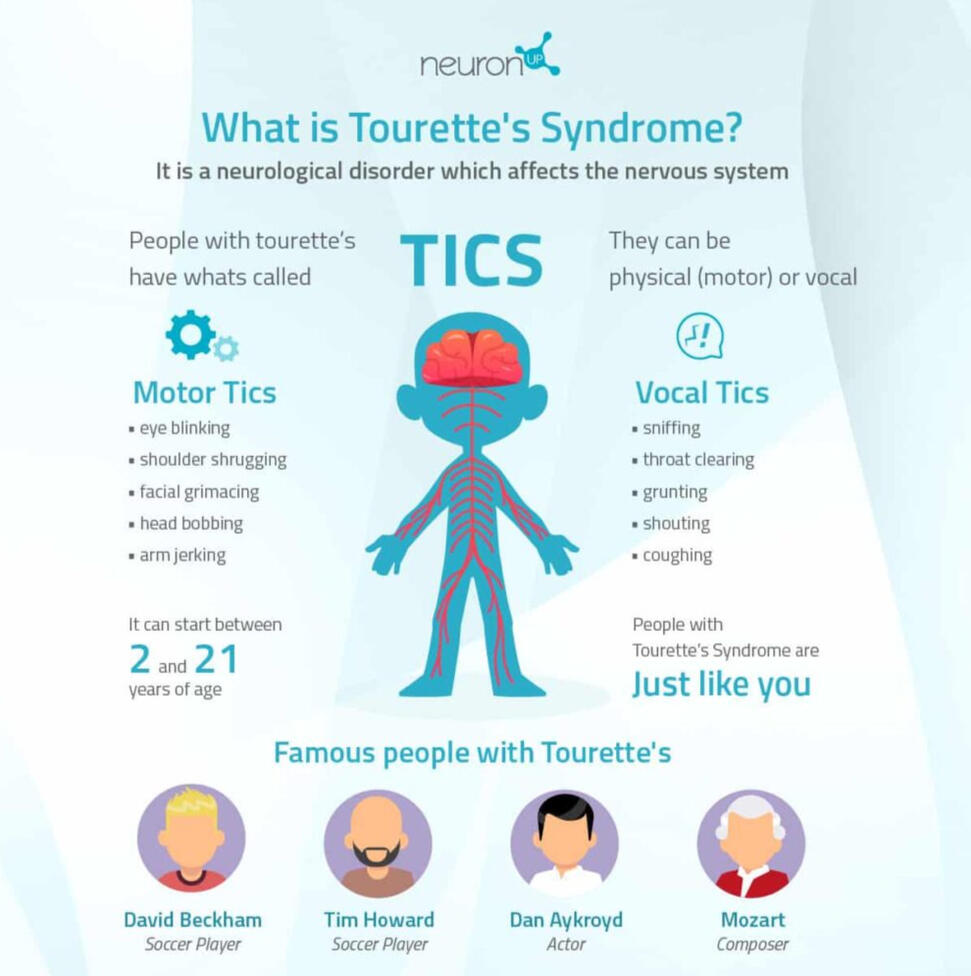
What is Tourette Syndrome?Tourette syndrome mainly affects the brain and nerves and usually begins at childhood. The science behind this syndrome is the impulses of neurotransmitters, often being serotonin and dopamine, trigger the brain with these chemicals that may be the cause behind the tics.
How do Tourette symptoms look like?
People with Tourettes have both motor and vocal tics.
Motor tics are sudden body movements such as eye blinking, head jerking, and even stepping in certain ways like hopping.
Vocal tics are sudden speech tics such as repeating the same phrase and word, or sometimes even exclaiming obscenities and curse words. Although this syndrome is quite tiring and taxing on the person's body, these involuntary movements cannot be controlled. These tics are often triggered by anxiety or exciting events.
How are Tourettes caused?
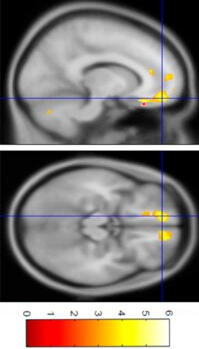
The answer is not definite yet, but scientists are inclining on theories such as family history genetics or sex. Men are 3-4 times more likely to get Tourettes than women.
Side Effects
Having Tourette Syndrome will most likely always affect a person's daily life. Tourettes can hinder the communication of the social life of the patient, their academic progress, and their physical body with these repeating tics. However, it is important to point out that people with Tourette Syndrome can still live happy and fulfilling lives.
Fun Facts about Tourettes
Only 1% of children are diagnosed with Tourette Syndrome.
Billie Eilish has Tourettes.
Children with Tourettes mostly always start with motor tics first.
Treatment
In order to reduce the dopamine in the brains of people with Tourettes, drug medication (such as haloperidol) can help reduce the chemical amount, although it often leads to extreme depression. Behavioral treatments are most commonly used to acknowledge tic responses and reduce tics with focusing on calmer activities. Psychotherapy can also help ease the coping mechanisms that Tourette patients use.
Citations
Tourette Syndrome | National Institute of Neurological Disorders and Stroke. www.ninds.nih.gov/health-information/disorders/tourette-syndrome.
“Tourette Syndrome - Symptoms and Causes.” Mayo Clinic, 8 Aug. 2018, www.mayoclinic.org/diseases-conditions/tourette-syndrome/symptoms-causes/syc-20350465.
“Five Things About Tourette | CDC.” Centers for Disease Control and Prevention, 9 May 2022, www.cdc.gov/ncbddd/tourette/features/tourette-five-things.html.